
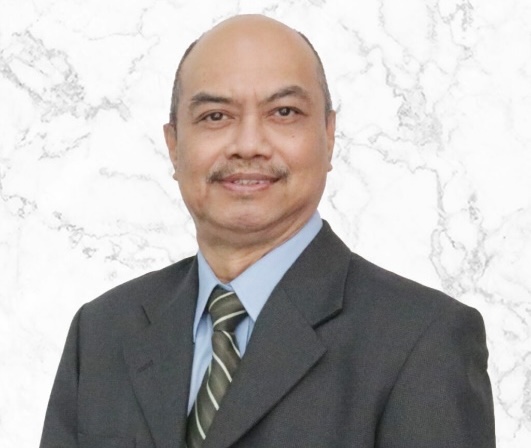

By: Perdana Wahyu Santosa*
Professor of Economics, Dean of the Faculty of Economics and Business, YARSI University, and Director of Research, GREAT Institute
Performance evaluations of government are always a contested arena between public perception, empirical data, and media framing. The “One-Year Performance Report of the Prabowo–Gibran Administration” released by CELIOS in October 2025 has sparked intense public debate.
Some view it as a healthy form of democratic oversight; others consider it overly pessimistic and lacking macroeconomic context, which in fact shows relatively stable trends. Both perspectives are important, as Indonesia’s mature democracy requires a strong dialectic between accountability and analytical fairness.
The real challenge lies in distinguishing data-based criticism from perception-driven judgment—between empirical reality and narratives shaped by collective opinion.
Methodology Under Scrutiny
CELIOS employs two approaches: an expert judgment survey based on journalists (120 respondents from 60 media institutions) and a national public survey of 1,338 respondents. This methodology is valid within perception studies, but it does not represent an objective measure of economic or administrative performance.
Journalists are selected because they are considered to have access to information and sensitivity to public issues. However, their work is also embedded in the realm of opinion—often shaped by fast-moving narratives rather than long and complex policy processes. This creates a potential bias known as the availability heuristic, where assessments are influenced by the most accessible and frequently reported information rather than the most accurate data.
As a result, the finding that government performance is rated at an average of 3 out of 10 does not necessarily indicate structural failure. Rather, it reflects public disappointment with expectations that have not yet materialized within a short timeframe. Such evaluations are important, but must be balanced with factual data to avoid premature conclusions.
Stability in Transition
Economically, the first year of the Prabowo–Gibran administration took place in a transitional policy phase. Key challenges stemmed from weaker exports due to China’s slowdown and geopolitical tensions in the Middle East that pushed up global energy prices.
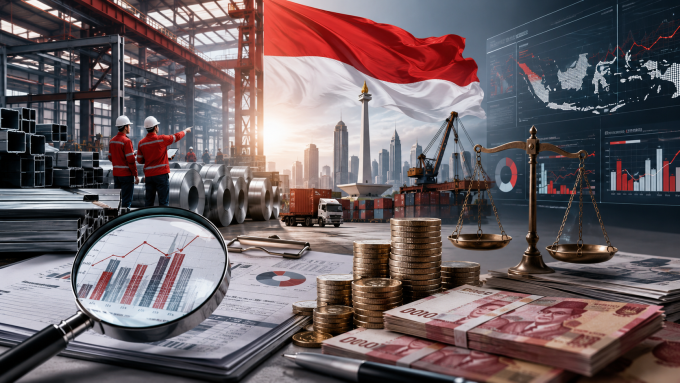
Despite this, macroeconomic indicators remained relatively stable: Indonesia’s 2025 growth stood at 5.12 percent (BPS), inflation remained below 3 percent, and the rupiah was relatively stable at Rp15,800–16,200 per USD.
Foreign direct investment grew moderately, particularly in base metals, electric vehicles, and digital infrastructure, although still below government targets. Policies on downstream industrialization and strategic sector strengthening indicate medium-term continuity, even though their economic impact is not yet fully visible within a single year.
From a macroeconomic perspective, performance cannot reasonably be described as “3 out of 10.” However, from a socio-political perception standpoint, a gap is evident between government narratives of success and people’s lived experience of stagnant purchasing power, food price pressures, and taxation concerns.
Social and Political Dimensions
The CELIOS report also highlights public perception of increasingly centralized and military-style governance, with 63 percent of respondents agreeing with this view. This perception is influenced by President Prabowo’s background as a former general and the consolidation of executive power.
However, a military-style leadership perception does not automatically equate to democratic backsliding. In Indonesia’s context, a command-style leadership is often seen negatively, yet during periods of political consolidation it can also function as a mechanism for policy coordination across ministries. The core issue is not leadership style itself, but the limited space for public participation in policy formulation.
This is where evaluation becomes important: the public feels insufficiently involved in major strategic policies such as the Nusantara Capital City (IKN), green energy transition, and tax reform. This signals the need for stronger participatory channels and improved transparency in policy communication.
Policy Communication Gap
One of the most critical findings from the CELIOS report is weak policy communication, with 63 percent of respondents rating it as “very poor.” This criticism is difficult to dismiss.
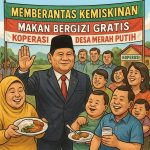
Government programs—such as Free Nutritious Meals (MBG), Red-and-White Village Cooperatives, tax reforms, and food security initiatives—are often communicated without adequate translation into the lived realities of citizens.
In public policy theory, communication is not merely information dissemination, but a process of constructing shared meaning between policymakers and the public. When policies are poorly understood, social resistance increases—even toward programs that are substantively beneficial.
Thus, the issue is not only the content of policy, but also how effectively its intent is communicated to society.
Between Evaluation and Delegitimization
Research institutions play an important role in criticism, but risks emerge when perception-based surveys are treated as standalone empirical evidence. When used in isolation, such data can shift from being a corrective instrument into a tool of delegitimization.
Sound policy evaluation requires triangulation—combining public perception, macroeconomic indicators, and internal government performance data. Without this, research risks amplifying confirmation bias: skeptics become more convinced of failure, while supporters dismiss findings entirely.
Therefore, both research institutions and the government must commit to data transparency. Think tanks should broaden methodologies by incorporating interdisciplinary academic input and macro indicators, while the government should respond constructively rather than defensively.
A healthy democracy is not one free from criticism, but one capable of transforming criticism into better policy.
Conclusion
A one-year government evaluation is only an early mirror, not a final verdict. Strong criticism such as that from CELIOS should serve as an early warning for improvements in communication, coordination, and governance.
However, the public must also recognize that structural reform cannot be measured by short-term satisfaction alone. While perception matters, policy truth is ultimately determined by real-world outcomes: whether poverty and unemployment decline, productive investment increases, and public services improve.
In an era of polarized opinions, the greatest wisdom lies in balancing sharp criticism with objective analysis. Only through this balance can Indonesian democracy evolve not as a stage of sentiment, but as a rational public space grounded in data, performance, and future hope.
*Professor of Economics, Dean of FEB Universitas YARSI, and Director of Research, GREAT Institute