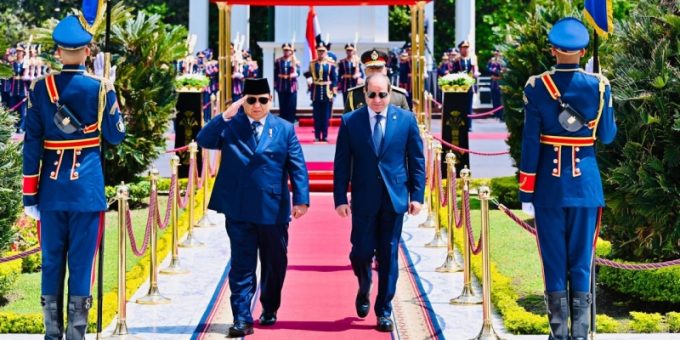


The Jakarta–Bandung High-Speed Rail project (KCJB/KCIC), commonly known as Whoosh, is once again under public scrutiny after President Prabowo Subianto instructed Finance Minister Purbaya Yudhi Sadewa and BPI Danantara CEO Rosan Roeslani to find a comprehensive solution to its debt burden, which has reached around IDR 116 trillion. This directive stems from concerns that the project’s liabilities could threaten fiscal stability, while the government still seeks to maintain its commitment to modern and affordable public transportation.
The government has emphasized that the state budget (APBN) will not be used directly to cover Whoosh’s obligations. Instead, the financing burden is being directed to Danantara as the state-owned enterprise holding company. This is where the debate intensifies. The House of Representatives (DPR) has warned that profits from healthy SOEs should not become a permanent “first-aid kit” to cover losses from projects that are still running a deficit of around IDR 2 trillion per year. If cross-subsidy practices are carried out without limits, corporate efficiency incentives could be undermined and moral hazard could become entrenched.
Financial Risks to the State
From a numerical perspective, the risks are not small. Total investment, initially estimated at around USD 6 billion, has now increased to more than USD 7.5 billion, or approximately IDR 115–125 trillion. Around 75 percent of the financing comes from China Development Bank (CDB) loans with interest rates of approximately 3.4–4 percent per year. Annual interest payments alone approach IDR 2 trillion, while KCIC’s financial reports still show losses of around IDR 1.6 trillion in the first half of 2025. Operating cash flow is clearly insufficient to cover interest expenses, let alone principal repayments.
In the global context, Indonesia’s position becomes increasingly complex. China’s economic slowdown, bond market volatility, and tighter liquidity conditions in the region make dollar-denominated debt riskier. Assigning the burden to Danantara can be seen as an attempt to “shield” fiscal risk: placing liabilities on the balance sheets of SOEs rather than directly on the state budget. However, if Danantara absorbs too much risk without sufficient capital buffers, pressure could spill over to other SOEs and the national banking system through interconnected credit and bond exposures.
Alternative Solutions
From an economic-political standpoint, there are three rational solution paths.
First, a major restructuring with CDB: extending the tenor to 40–60 years and reducing interest rates to around 1–2 percent. This approach has been pursued by several Belt and Road countries; the key lies in Indonesia’s diplomatic capacity to renegotiate the project’s risk profile without damaging strategic relations with China.
Second, transforming KCIC’s business model so it does not rely solely on ticket revenues. High-speed rail systems in Japan and South Korea are financially viable because they are supported by transit-oriented development (TOD) schemes. Land around Halim, Karawang, Padalarang, and Tegalluar has strong potential to be developed into business centers, logistics hubs, vertical housing, and high-tech parks. Long-term revenue from land leasing, property development, and commercial services is far more stable than relying on daily passenger occupancy.
Third, strengthening multimodal transport integration and expanding the user base. Whoosh’s occupancy rate remains below target because access to stations is not yet fully integrated with commuter trains, LRT, intercity buses, and urban transport systems. Fare integration, dynamic pricing systems, and business and tourism travel packages need to be aggressively promoted. At the policy level, the government could also create captive demand through incentives for official travel and urban planning policies that encourage modal shifts from private vehicles to mass transportation.