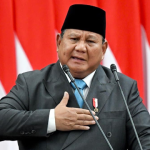


President Prabowo Subianto’s speech during the Plenary Session of the House of Representatives of the Republic of Indonesia (DPR RI) on Wednesday, May 20, 2026, was viewed as carrying broader significance than merely presenting annual economic targets. The President’s direct presence in delivering the introduction to the Macroeconomic Framework and Main Fiscal Policy Directions (KEM-PPKF) for the 2027 State Budget Draft was seen as a signal that the government intends to position the 2027 State Budget as a strategic instrument to strengthen fiscal foundations while reorganizing the direction of the national economy.
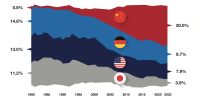
The government is targeting economic growth for 2027 in the range of 5.8–6.5 percent. State revenue is projected at 11.82–12.40 percent of GDP, while state expenditure is expected to range between 13.62–14.80 percent of GDP. Meanwhile, the budget deficit is targeted to remain within 1.80–2.40 percent of GDP.
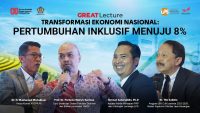
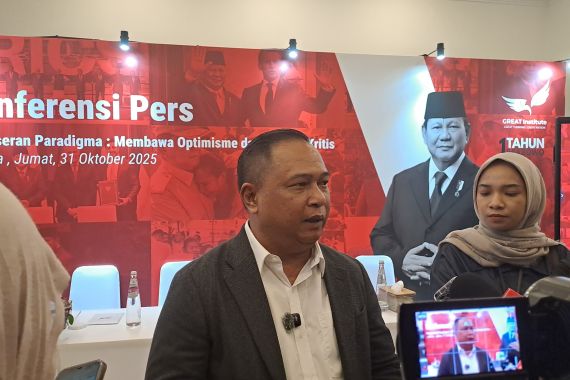
Executive Director of Great Institute, Sudarto, stated that the main strength of the President’s speech lay in his courage to connect the State Budget with the protection of the people, reform of state revenue, and the strengthening of sovereignty over national wealth.
In his speech, the President emphasized that the State Budget must serve as an instrument to protect society, strengthen national economic resilience, and improve public welfare. He also stressed the importance of maintaining a prudent and sustainable fiscal direction for 2027 amid rising global geopolitical and geo-economic uncertainty.
According to Sudarto, this message was important because it was delivered at a time when markets were paying close attention to Indonesia’s economic condition, particularly following the negative outlook revisions issued by Moody’s and Fitch Ratings, the weakening of the rupiah, and ongoing pressure on the domestic stock market in recent months.
Sudarto also noted that the President’s speech stood out because it openly addressed fundamental issues within Indonesia’s fiscal structure, including the low ratio of state revenue to GDP and alleged leakages in the management of national wealth, including under-invoicing and transfer pricing practices.
In addition, the President reaffirmed the importance of implementing the mandate of Article 33 of the 1945 Constitution as the foundation of national economic development, ensuring that natural resources are managed for the greatest prosperity of the people.
Great Institute believes that the government is beginning to connect the macro-fiscal agenda with efforts to reform the national economic structure more openly. However, the main challenge is still considered to lie in policy implementation.
The state revenue target, which remains within the range of 11.82–12.40 percent of GDP, indicates that revenue reform still needs to be strengthened if the government wants to finance priority programs without increasing fiscal risks.
Sudarto emphasized that state revenue reform must be carried out more seriously through tighter supervision of commodity exports, better inter-agency data integration, and improvements in tax and customs governance down to the implementation level.