

In the last decade, Indonesia has experienced the largest social revolution since the 1998 reform era—but without street protests, without political manifestos, and without charismatic leaders.
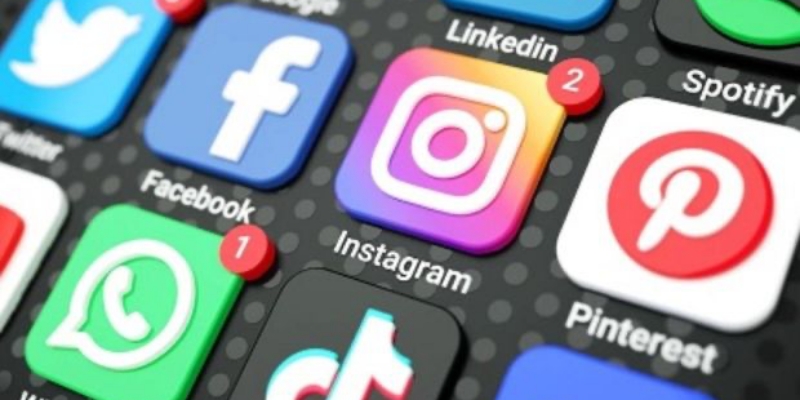
This revolution takes place only on smartphone screens, driven by internet connectivity and social media. Data from We Are Social shows that in 2025 the number of internet users in Indonesia reached 212 million people (74.6% penetration of the population), while active social media users reached 143 million.
This makes Indonesia one of the largest digital societies in the world. However, behind this euphoria, the digital revolution brings economic, social, and political impacts that are far deeper than we realize.
Technology has clearly transformed Indonesian consumer behavior fundamentally. In the pre-digital economy, economic activity was local and physical. Now, transactions have shifted into cyberspace, governed by algorithms that determine what we see, buy, and think.
Marketplaces such as Tokopedia, Shopee, and TikTok Shop have created a generation of consumers who interact with the market 24 hours a day—not through physical stores, but through curated feeds.
This phenomenon gives rise to what is called “algorithmic consumption,” where every economic decision is no longer purely based on needs, but rather driven by algorithmic prompts that exploit user behavior data. Products, advertisements, and even political opinions are tailored to individual preferences.
In the short term, this model increases market efficiency; in the long term, it creates new risks: loss of consumer autonomy and information monopoly by digital tech giants.
In fact, the macroeconomic consequences are significant. The digital sector has contributed more than 7% of Indonesia’s GDP in 2024 and is projected to reach 12% by 2030.
However, most of this value added is concentrated in global companies such as Meta, Google, and ByteDance. Newly implemented digital taxes are still insufficient to close cross-border value leakage.
Indonesia needs a more progressive digital fiscal policy: a digital transaction tax and data value sharing so that the digital economy truly creates equitable welfare, not merely new dependency.
Is Education Becoming More Connected?
The digital era has opened unlimited access to information for the younger generation. Data from the Indonesian Internet Service Providers Association (APJII) shows that Gen-Z and millennials account for more than 65% of national internet users.
Today, students access YouTube content faster than they read textbooks. Ed-tech applications and online learning platforms promise inclusive and flexible education.
However, ironically, technological progress does not always mean an improvement in learning quality. Many studies show that high screen time is often inversely related to critical thinking ability.
Digital literacy in Indonesia remains low—according to UNESCO, only 28% of students are able to distinguish credible information from fake news. The phenomenon of edutainment (education as entertainment) makes students focus more on information speed rather than depth of understanding.
In addition, digital inequality further widens regional gaps. BPS 2024 records that internet penetration in DKI Jakarta reaches 87.8%, while Papua is still below 50%. This means the digital revolution has not been evenly distributed.
When schools in big cities shift toward hybrid classes and AI-assisted learning, thousands of schools in remote areas still struggle with weak signals and limited devices. If digital education is not supported by affirmative policy, technology may deepen rather than reduce inequality.
New Social Structure
The impact of social media is not limited to consumption and politics, but also extends to economic structure. The younger generation now builds careers in digital spaces: influencer marketing, content creator economy, online trading, and freelance platforms. Formal jobs are shifting toward algorithm-based work—governed by rating systems rather than traditional employment relationships.
On one hand, this phenomenon increases flexibility and income opportunities. On the other hand, it creates a new form of economic uncertainty: the digital precariat—digital workers without social protection, without permanent contracts, and dependent on platform systems.
Cooperatives, labor unions, and our social security system are not yet ready to face this reality. Programs such as BPJS Employment have not fully covered digital economy workers.
Yet they are the backbone of the new economy. If the state fails to adapt labor and tax policies, the gap between the formal and digital economies will widen further.
Digital Literacy, Regulation, and Ethics
Indonesia is not lacking technology, but rather lacking digital ethics and literacy. The social media revolution that once promised participatory democracy has turned into an attention economy—where the fastest and loudest get the stage, while reflective voices are drowned out.
Public policy must adapt. First, digital platform regulation must balance freedom of expression with social responsibility. The government must negotiate more equally with global tech giants to ensure algorithmic transparency and fair taxation.
Second, critical digital literacy must be included in the curriculum from elementary school, not only teaching how to use technology, but how to understand and evaluate information.
Third, equitable digital infrastructure must become a new social justice agenda. Connectivity is not merely about signal, but about the right to participate in the digital economy and democracy.
Conclusion
In the synergy between literacy, regulation, and digital ethics, the government cannot work alone; the education sector must also instill digital ethics as a compulsory subject, and the private sector must adhere to the principle of tech for humanity, not merely tech for profit. In this context, collaboration between the state, academia, and the private sector becomes key.
The digital revolution in Indonesia is taking place without political thunder, but with seismic effects on society. It changes how we buy goods, learn, work, and express opinions. But without visionary policy, this revolution could create a generation that is connected yet fragmented—technologically smart, but poor in reflection.
The digital economy and social media are two sides of the newest coin of modernity: both open extraordinary opportunities, while also bringing new risks.
If Indonesia wants to harness this silent revolution to strengthen welfare and democracy, then development direction must shift from mere digital access toward digital wisdom, because in the end, a great nation is not the one with the most internet users, but the one that uses it most wisely.
- Professor of Economics, Dean of the Faculty of Economics and Business, YARSI University, and Director of Research at GREAT Institute.*