


Pancasila Day speeches often risk becoming annual rituals filled with grand rhetoric and aspirations but followed by little tangible change. In his Pancasila Day address on June 1, 2026, President Prabowo Subianto drew public attention by moving beyond the theme of national unity and bringing Pancasila into the realm of political economy.
In the speech, Pancasila was presented not merely as a historical document or national slogan, but as a guiding principle for building an economic system that serves the interests of the people. As such, the speech can be interpreted not only as a state address but also as a statement of economic policy direction.
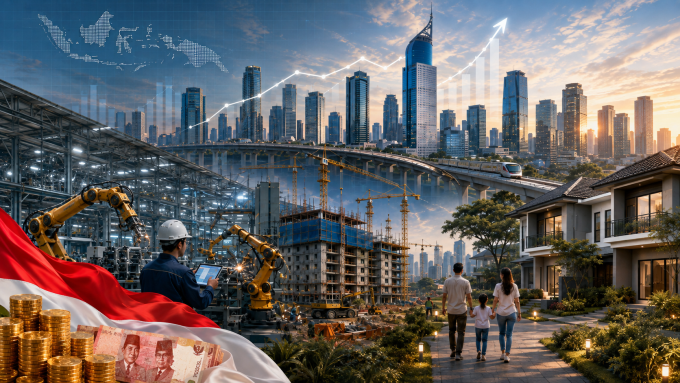
The ideas presented emphasized several key principles: economic growth that benefits all levels of society, natural resource management that prevents leakage of national wealth, downstream industrialization that generates real value added, courage in fighting corruption, and national unity that does not suppress criticism. Within this framework, Pancasila-based economic transformation emerged as the central theme, accompanied by an emphasis on natural resource sovereignty, social justice, national self-reliance, and anti-corruption efforts.
However, the concept of Pancasila Economics faces its own challenges. On one hand, it can serve as a foundation for productive state intervention and equitable development. On the other hand, its flexibility may allow it to justify inefficient policies or forms of patronage carried out in the name of the people. Therefore, its success should not be measured solely by intentions but by the state’s ability to become more effective, cleaner, and fairer.
From an economic perspective, current conditions provide room for government action. Indonesia’s economy grew by 5.61 percent year-on-year in the first quarter of 2026, while Bank Indonesia projected economic growth for 2026 to remain within the range of 4.9–5.7 percent. Nevertheless, economic growth does not automatically translate into social justice. The poverty rate in September 2025 stood at 8.25 percent, while the Gini Ratio was recorded at 0.363. Both indicators showed improvement, yet they also highlighted the continued vulnerability of millions of Indonesians. At the same time, the rupiah remained above IDR 17,800 per US dollar.
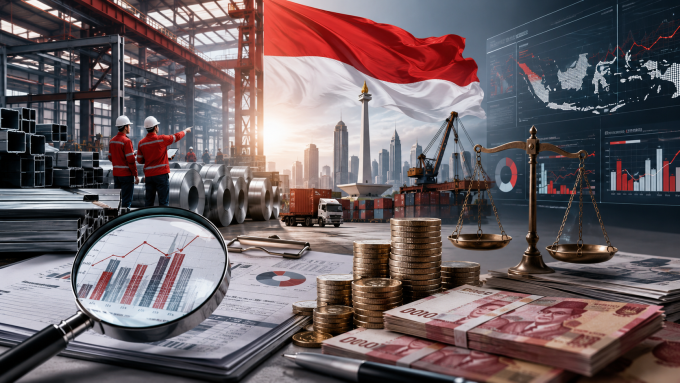
In this context, downstream industrialization must be approached carefully. Indonesia indeed needs to generate greater value from strategic commodities such as nickel, copper, coal, and palm oil. However, downstream policies that focus solely on processing facilities without strengthening research, skilled labor, environmental standards, MSME integration, and legal certainty risk creating a new form of extractive capitalism. Value added may remain within the country, but it will not automatically benefit the broader population.
The argument that the state must play a stronger role in guiding development has a valid basis, particularly in developing countries. However, state strength must be accompanied by institutional discipline. Pancasila should not be interpreted as a blank check for unlimited state intervention. The principle of social justice must go hand in hand with the principle of deliberation, meaning that major policies should be tested, criticized, audited, and improved whenever necessary.
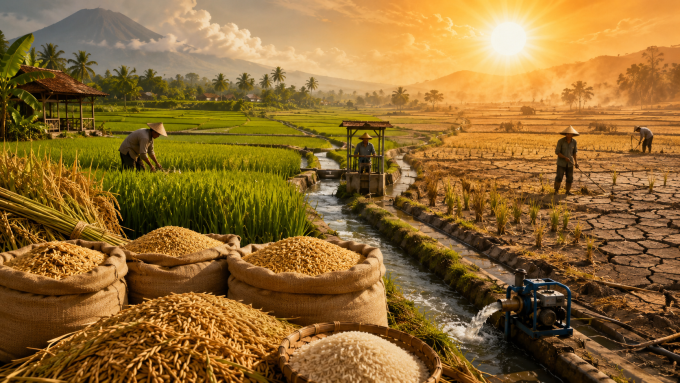
Programs such as the Free Nutritious Meals Program (MBG), cooperative development initiatives, protection for farmers and fishers, worker empowerment, and regional development policies are morally compelling. However, public policy must be evaluated not only by its objectives but also by the quality of its design, fiscal sustainability, implementation integrity, and measurable impact. Without these elements, social programs risk becoming ineffective and difficult to assess.
The same principle applies to anti-corruption efforts and the prevention of resource leakage. Strong rhetoric can send important signals, but public and market confidence depends on legal certainty, budget quality, institutional independence, procurement transparency, and regulatory consistency. Confidence is built not through slogans but through sound and consistent governance.
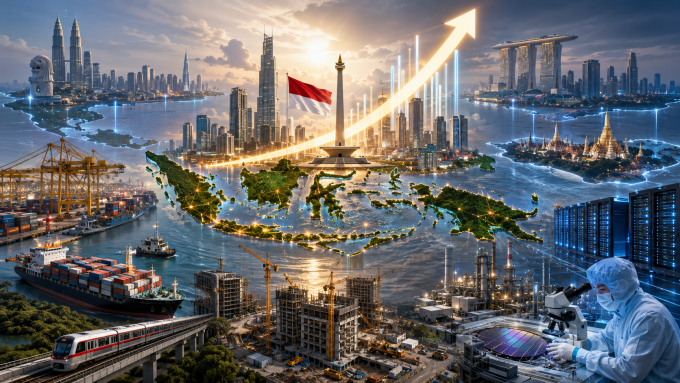
For this reason, the 2026 Pancasila speech should be viewed as a beginning rather than a conclusion. It opens space for a development path that is more national, socially just, and sovereign. At the same time, it raises critical questions about whether economic nationalism can generate productivity, whether equity can lead to empowerment, and whether a stronger state can also become a more effective one.
Ultimately, the implementation of Pancasila should not be measured by praise or applause. Its true measure lies in tangible outcomes, including increased value added enjoyed by Indonesian workers, more villages advancing economically, successful downstream projects that meet environmental and fiscal standards, transparent public procurement, improved child nutrition, and equal law enforcement. Indonesia is not built by imagination alone, but by disciplined budgeting, honest bureaucracy, healthy markets, fair laws, and leadership willing to be judged by results. After the applause ends, the most important stage for Pancasila is reality itself.