

Executive Summary
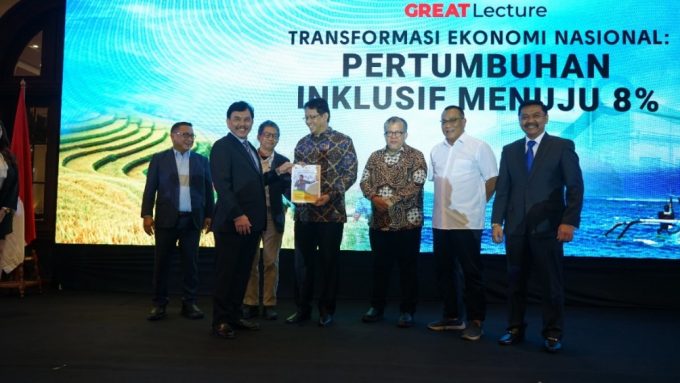
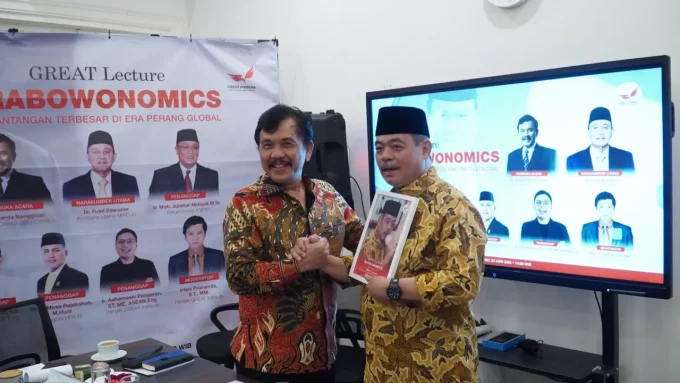
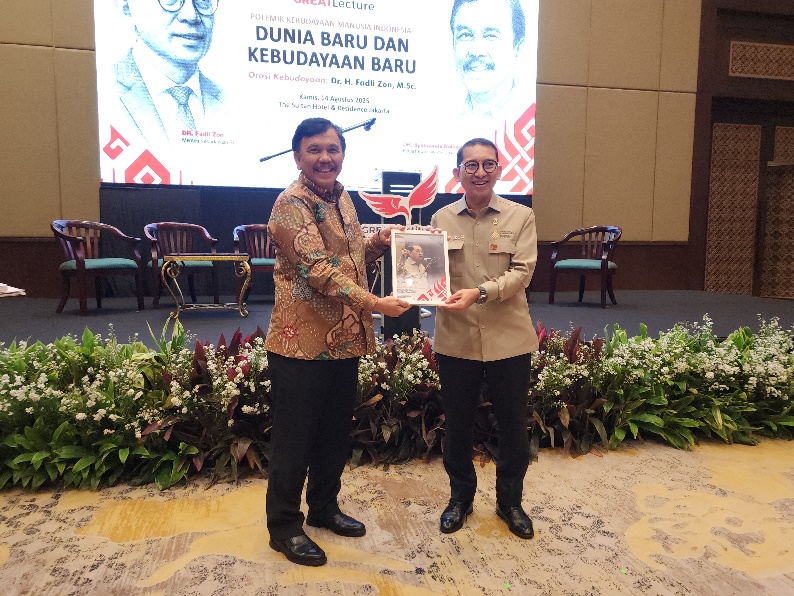
The GREAT Lecture titled “The Cultural Polemic of Indonesian Humanity: A New World and a New Culture”, held in Jakarta on August 14, 2025, and organized by GREAT Institute, featured Minister of Culture Fadli Zon as the main speaker, alongside political figures, academics, writers, and cultural practitioners from diverse disciplines. The forum served as a space for reflection on the direction of Indonesian culture amid an identity crisis and globalisation pressures, while continuing the tradition of cultural polemics that dates back to Sutan Takdir Alisjahbana and Sanusi Pane, as well as the ideological contest between Manifes Kebudayaan and Lekra.
In his keynote address, Fadli Zon emphasized the need to “rediscover national identity,” drawing on Indonesia’s long civilizational heritage—from Homo erectus archaeological findings and ancient cave paintings to thousands of intangible cultural heritage assets. Indonesia is seen as having the potential to become a global cultural epicenter if it can strengthen its national narrative. The Chairman of GREAT Institute’s Board of Directors, Syahganda Nainggolan, stressed the importance of cultural sensitivity among political elites to ensure leadership remains grounded in social context.
Sociologist Okky Madasari emphasized that rewriting Indonesian history would only be meaningful if done inclusively, involving diverse groups rather than being a state-dominated project. Meanwhile, Hetifah Sjaifudian highlighted that culture must be positioned as a foundation of national development, requiring close collaboration between government, parliament, the education sector, and cultural communities. Other discussants similarly stressed the importance of open, plural, and adaptive cultural dialogue in the digital era.
Interactive discussions involving 129 offline participants and 350 online participants produced three strategic recommendations: (1) the formulation of a “Rediscovering the Indonesian Human” narrative emphasizing Indonesia’s maritime, cosmopolitan, and adaptive identity; (2) inclusive rewriting of Indonesian history involving academics, cultural practitioners, and local communities; and (3) strengthening global cultural diplomacy to position Indonesia as a world cultural hub.
Thus, the GREAT Lecture did not merely reproduce earlier cultural debates, but opened pathways for a new cultural strategy oriented toward national identity, independence, and Indonesia’s active role in global civilization. It reaffirmed culture as a strategic force in national development across political, economic, and social dimensions, as well as a foundation for Indonesia’s emergence as a major global civilization.
Background
Amid globalization and an ongoing identity crisis, debates on Indonesian cultural direction have resurfaced. The central question is whether the Indonesian people are “colonized”—passive and marginalized—or resilient actors shaping their own historical trajectory. This polemic is not merely academic, but touches the core of national identity, especially as younger generations become increasingly disconnected from historical roots and cultural narratives are often dominated by external perspectives.
Historically, similar debates have long existed. The polemic between Sutan Takdir Alisjahbana and Sanusi Pane in the 1930s contrasted Western modernity with Eastern spiritual values. In the 1950s–1960s, the clash between Manifes Kebudayaan and Lekra reflected tensions between artistic freedom and ideological demands. During the New Order, the state attempted to monopolize culture, though alternative intellectual currents persisted.
In the Reform era and digital age, information technology has radically transformed cultural landscapes. Social media has accelerated the “death of expertise” while also enabling democratized cultural participation. At the same time, Indonesia’s collective traditions now face patrimonial structures that foster oligarchic tendencies, alongside renewed awareness of the archipelago’s long civilizational history.
In this context, Indonesians must be understood not merely as victims of colonialism or modernity, but as active historical agents. A revision of national cultural narratives is therefore necessary—from passive marginality toward a heroic, participatory, and cosmopolitan identity.
Objectives
The seminar aimed to generate a renewed cultural polemic in Indonesia, where the digital era produces new cultural forms as a synthesis of earlier cultural debates.
This renewed discourse is expected to inform future policy directions under the administration of Prabowo Subianto across political participation, economic productivity, and social values.
Program Details
- Date: Thursday, August 14, 2025
- Time: 12:00–16:00 WIB
- Venue: Sultan Hotel & Residence
- Format: Public lecture, panel responses, interactive discussion
Speakers and Respondents
- Opening Remarks: Syahganda Nainggolan
- Cultural Oration: Fadli Zon
- Respondents: Hetifah Sjaifudian, Okky Madasari, and others
- Moderator: Khalid Zabidi
Key Discussion and Outcomes
The forum reaffirmed that cultural polemics in Indonesia are not merely ideological struggles but essential processes for redefining national identity in a rapidly changing world. Culture was consistently framed as a strategic foundation for democracy, economic development, and global positioning.
Three main recommendations emerged:
- Develop a national cultural narrative emphasizing Indonesia’s maritime, cosmopolitan, and historically rooted identity.
- Conduct inclusive rewriting of national history with broad stakeholder participation.
- Strengthen cultural diplomacy to position Indonesia as a global cultural center.
Follow-up Recommendations
- Develop an intersectoral national cultural narrative framework
- Establish a multidisciplinary team involving historians, anthropologists, and cultural communities
- Promote Indonesia’s cultural potential through international diplomacy, exhibitions, and cultural exchange programs
Conclusion
The GREAT Lecture served as a collective reflection platform for intellectuals, policymakers, and cultural actors to reimagine Indonesia’s cultural direction amid global transformation. It reaffirmed that culture is not merely heritage, but a strategic force shaping national identity, strengthening democracy, and positioning Indonesia within global civilization.