


Indonesia has a cooperative paradox: the number of cooperatives is large, the “pillar of the economy” rhetoric is strong, yet their contribution and competitiveness often fall short of their potential. In many regions, cooperatives exist as administrative formalities or merely fragile savings-and-loan “shops” when governance is weak.
Therefore, the discourse on the National Cooperative System Law, the strengthening of LPDB, the option of a cooperative bank, and the Merah Putih Village Cooperatives (KDMP) should not be read as mere political slogans—but as institutional engineering that will determine whether cooperatives become engines of rural productivity or just new nameplates.
Cooperatives That Are Only “Alive on Paper”
The problems of Indonesian cooperatives are rarely singular; they are layered and typically come as a “social-economic package”:
First, governance. Many cooperatives are weak in transparency, management accountability, the quality of member meetings, and bookkeeping discipline. When member participation is low, cooperatives easily become arenas of elite capture: decisions are made by a few individuals, while risks (non-performing loans, mismanagement, even fraud) are borne collectively. This is not merely a moral issue—it is an incentive design issue.
Second, a narrow business model. Historically, many cooperatives are locked into consumption and savings-and-loan activities, with weak capacity to enter the real/production sector. Yet the greatest value added in rural areas comes from aggregation: joint input procurement, post-harvest processing, warehousing, logistics, and marketing. The Ministry of Cooperatives itself emphasizes repositioning cooperatives toward production and manufacturing—an implicit acknowledgment that the old model is insufficient.
Third, capital access and scale. Cooperatives face a classic dilemma: they must remain member-based and democratic, but they also need large capital for productive investment. Without appropriate financing instruments, cooperatives struggle to “move up” from micro-enterprises into higher-value supply chains. This is where strengthening LPDB and the option of a cooperative bank becomes relevant as financial infrastructure for the cooperative movement.
Fourth, regulatory uncertainty and interpretation. Cooperatives still rely on the old Cooperative Law (Law No. 25/1992), which—even with derivative regulations and omnibus adjustments—still creates interpretive ambiguity when the government pushes large-scale village cooperative formats. In this ambiguity lies legal risk: cooperatives may be forced to resemble corporations or village-owned enterprises, while simultaneously being required to adhere to cooperative principles—resulting in institutional confusion.
New Law, Cooperative Bank, LPDB, and KDMP—but Must Avoid Illusions
The proposed National Cooperative System Law is important because it attempts to close these design gaps, particularly in governance. The Minister of Cooperatives has stated that around 60% of the draft focuses on governance reform, and KDMP provisions will be included as a legal foundation rather than relying on interpretations of older laws. This is the right signal, because a program as large as KDMP should not stand on half-formed legal foundations.
However, a new law is only a framework. To avoid becoming cosmetic, three “sanity conditions” are necessary:
Auditable governance, not just advisory governance. If the goal of the bill is to strengthen cooperative governance, success must be measurable: reporting standards, audits, eligibility tests for managers, sanction mechanisms, and member protection systems. Cooperative reform usually fails not because of insufficient training, but because bad incentives remain unchanged.
Financing aligned with cooperative DNA. Strengthening LPDB is relevant if it functions as leverage for productive investment (warehouses, cold chains, processing facilities, village clinics/pharmacies under the KDMP concept), not merely a substitute for commercial bank credit. The Minister of Cooperatives has indicated plans to discuss additional LPDB capital with the Minister of Finance to enable cooperatives to enter manufacturing—this is a productivity-oriented direction, not just credit expansion.
Cooperative bank: bridge, not trap. The idea of a cooperative bank—whether through inter-cooperative ownership or acquisition of existing banks—is attractive for closing intermediation gaps and building a financial backbone for cooperatives. But it also carries risk if cooperative governance is still weak: it could become a vehicle for systemic risk accumulation. Sequencing is therefore critical: start with risk management, asset quality, and compliance, then expand.
For KDMP, the reported 2026 operational target shows high ambition: modern-style retail outlets, clinics/pharmacies, warehouses, and various village service functions. This could be a leap in welfare—if it avoids two classic pitfalls: politicization (cooperatives becoming ceremonial projects) and market substitution (crowding out local enterprises instead of integrating them into supply chains).
Cooperative Reform Is About Design
A cooperative is a social technology: it works when the rules make honesty easier than opportunism, and productivity more rewarding than rent-seeking. Therefore, the push for a new Cooperative Law that sharpens governance, strengthens LPDB as a productive investment lever, and explores a cooperative banking system is economically and politically sound.
It is worth acknowledging that President Prabowo Subianto has positioned the KDMP program as a strategic agenda. This is where the idea of an “economic Pancasila” can be tested—not as rhetoric, but through transparent, competent, and productive village cooperatives. If the legal design is sound and implementation is disciplined, KDMP could become a national laboratory for restoring cooperatives to their original meaning: a tool for citizens to gain sovereignty over their own economic life.
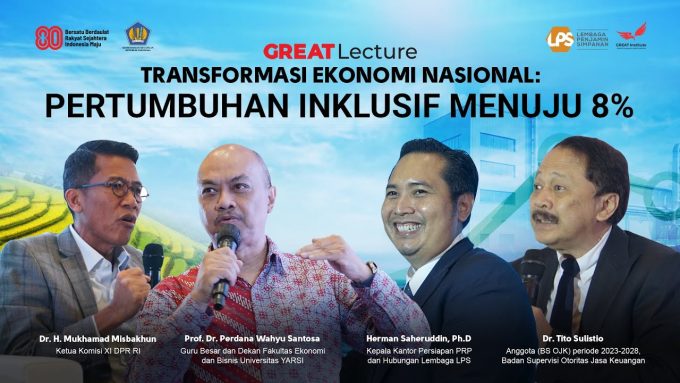
The author is Professor of Economics, Dean of the Faculty of Economics and Business at Universitas YARSI, Research Director of GREAT Institute, and CEO of SAN Scientific.