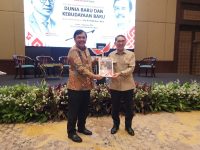



Jakarta – Amid the hybrid work from home (WFH) policy implemented by the Ministry of Immigration and Corrections since 2023, Kementerian Imigrasi dan Pemasyarakatan Staf Khusus Menteri Ir. H. Abdullah Rasyid, M.E., emphasized that work flexibility must still uphold high discipline, measurable productivity, and uninterrupted public services, especially in the era of post-Presidential Instruction No. 10/2024 digital transformation.
Abdullah Rasyid views WFH as part of the government’s directive for bureaucratic efficiency, where the Ministry of Immigration and Corrections has successfully integrated 70% of immigration services through digital portals such as M-Paspor and SIMKIM, reducing physical queues by up to 40% in 2025. However, he added that WFH implementation requires strict supervision through real-time monitoring dashboards, daily KPI targets, and technologies such as Zoom for meetings as well as AI-based reporting applications.
“WFH is not an excuse to slow down. It is an opportunity to build an adaptive work culture within Kemenipas, where the work rhythm actually increases due to reduced commuting time for employees. Immigration services, electronic visas, and prison and detention monitoring must remain excellent, as shown by a 15% increase in online visa approvals this year,” Rasyid stated in Jakarta (10/4).
As a special staff member, he is committed to providing strategic input so that WFH aligns with bureaucratic reform, including special arrangements for frontline units such as airport immigration offices and correctional guidance centers. In 2026, the Ministry implemented a 60:40 rotation system (office:home) for direct service units, ensuring public access remains uninterrupted despite prison overcrowding reaching 120% of national capacity.
“Following leadership directives, WFH will not hinder services for citizens needing emergency passports or prison visits. The balance between flexibility and responsibility is key, supported by proportional scheduling and system integration such as e-Lapas for online coordination,” he said.
Abdullah Rasyid also encouraged the optimization of Kemenipas digital tools such as virtual meetings via Microsoft Teams and electronic reporting via SIPAS, which have reduced office operational costs by 25% since 2025. If managed properly, WFH not only improves efficiency but also enhances employee focus.
“The focus is not physical presence, but real performance. As long as targets are achieved, services run smoothly, and discipline is maintained—such as the 20% productivity increase in non-frontliner units—then WFH becomes a pillar of bureaucratic reform in Kemenipas,” he concluded.