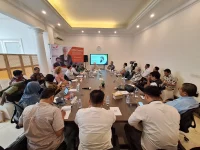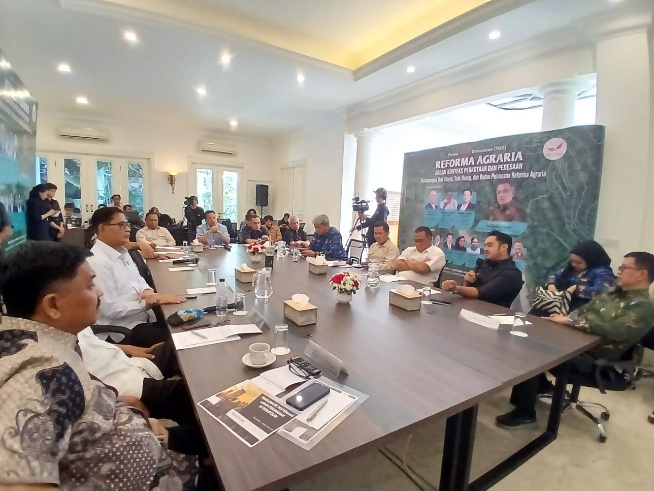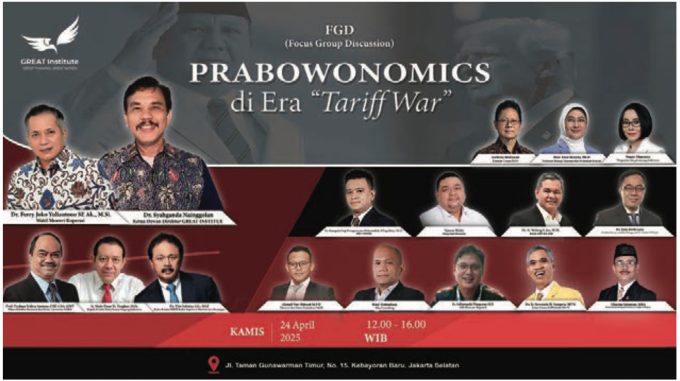

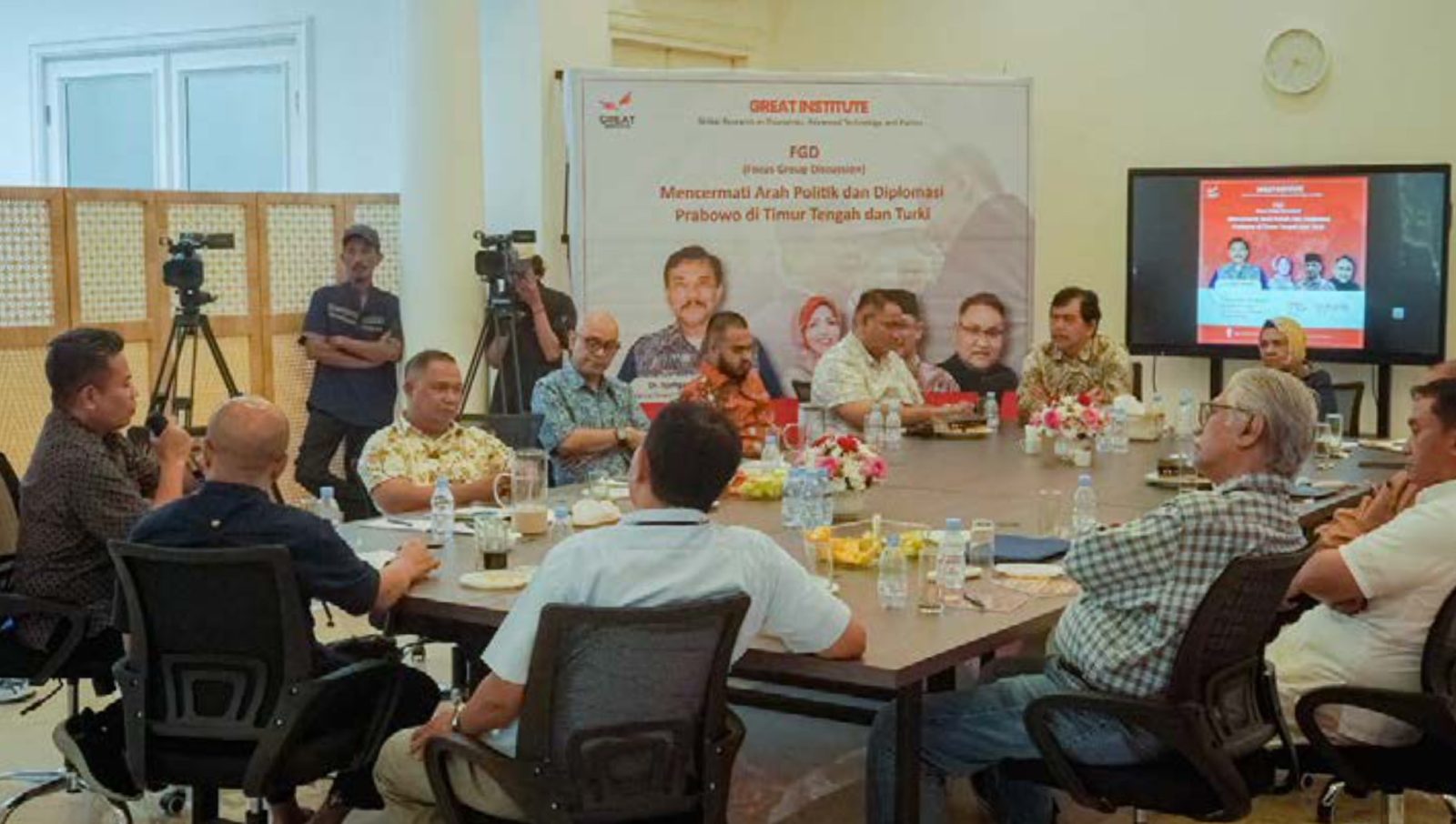

At a Focus Group Discussion (FGD) held in a modest room, intellectual tension flowed intensely. Scholars, diplomats, and foreign policy analysts gathered in a discussion titled “Observing the Direction of Prabowo’s Politics and Diplomacy in the Middle East and Turkey.”
The forum was not merely about the agenda of President Prabowo Subianto’s visits to the United Arab Emirates, Turkey, Egypt, Qatar, and Jordan. More than that, the FGD examined a larger question that quietly lingers in many minds: where exactly does Indonesia want to be taken on the global stage?
The Chair of the Board of Directors of GREAT Institute, Syahganda Nainggolan, opened the discussion by emphasizing Prabowo’s potential to emerge as a new leader of the Global South. He noted that Prabowo has a strong opportunity to mobilize solidarity among developing countries and offer new direction in the global architecture. But Syahganda did not stop there. He inserted a firm note of warning: communication.
“Our political communication is not yet proportional to the scale of the steps we want to take,” he said briefly but meaningfully. In an era where diplomacy is often contested in the realm of perception rather than negotiation tables, a wrong narrative can overshadow good intentions.
The atmosphere of the forum grew warmer when Dr. Teguh Santosa, Director of Geopolitics at GREAT Institute, spoke. With a calm tone but layered argumentation, he offered a realist interpretation of the international system as an anarchic arena. For Teguh, Indonesia’s major mistake is shifting dependency from one hegemon to another.
“The antithesis of dependency is not switching loyalties,” Teguh said. “The antithesis is the absence of dependency altogether.” The statement hung in the air like a hammer strike, reminding everyone that sovereignty is not merely symbolic, but about equal relations without subordination. He also quoted Kant: peace is only possible when all stand equal.
Dr. Zarman Syah added a historical dimension to the discussion. Indonesia, he said, has a “long-term investment in world peace”—a diplomatic capital that is often forgotten. He stressed that President Prabowo’s foreign missions should continue Indonesia’s long tradition of peace diplomacy, not merely ceremonial visits. Diplomacy, Zarman argued, must produce concrete outcomes, including in the economic sphere.
The discussion featured three key initiators: Dr. Nurhayati Assegaf, Dr. Hilmy Bakar Almascaty, and Dr. Teguh Santosa. They offered deep readings of Indonesia’s relations with the Middle East and Turkey. Dr. Hilmy, in a sharp reflection, stated that true diplomacy is not only about political maneuvering but also about a struggle of values. “Without an ethical face, diplomacy loses legitimacy,” he said.
Other respondents were equally sharp. Dr. Indra Kusuma Wardhani and Dr. Rizal Darmaputra emphasized that Indonesian diplomacy must reach the concrete level—economy, technology, and industrial cooperation—not just protocol-driven ceremonies. Meanwhile, Prof. Iswandi Syahputra and Dr. Rahmi Fitrianti urged that Indonesia’s soft power—culture, spirituality, and mutual cooperation—be elevated globally as a true diplomatic instrument. “We often forget that local values are the most resilient form of soft power,” Iswandi said.
Indonesia’s stance on Palestine also became a focal point. Smith Alhadar and Omar Thalib emphasized that Prabowo’s visit to conflict regions should not be “overly neutral.” “In situations of injustice, neutrality is siding with the oppressor,” Smith said, echoing a sharp quote from Desmond Tutu.
Another voice came from geopolitical observer Hanief Adrian. He argued that Prabowo’s diplomacy must not stop at diplomatic gestures. “What we need is synergy between diplomacy, economics, and geopolitical education for the public,” he said. Diplomacy, in Hanief’s view, is not an elite domain alone, but something that affects ordinary people—in markets, classrooms, and farms.
Ir. Wahyono added concern that foreign diplomacy is often only understood by elites. He proposed that the state open public education channels on geopolitics so citizens can understand, not merely guess, Indonesia’s position.
Toward the end of the discussion, the moderator read a quote from Edward Said: “There is no power without knowledge, and no knowledge without power.” A strong signal that true diplomacy does not belong solely to palaces and ministries, but to a nation that is geopolitically literate.
Indonesia, in the remaining impressions of the discussion, appears to be writing a new chapter in its foreign policy. But as Albert Camus once said, “To be neither victim nor executioner requires a firm and relentless engagement.” The question then becomes: will Indonesia choose to remain a nation safely distant from its history, or emerge as a maker of history that knows exactly where it is heading?
One thing cannot be denied: this forum was not merely a space for debate. It was a mirror. And like all honest mirrors, it shows us as we are—and the direction we may need to take.
FGD participants: Dr. Nurhayati Assegaf, Dr. Hilmy Bakar Almascaty, Dr. Teguh Santosa, Dr. Rizal Darmaputra, Dr. Zarmansyah, Dr. Indra Kusuma Wardhani, Dr. Rahmi Fitrianti, Prof. Iswandi Syahputra, Dr. Sudarto, Smith Alhadar, Omar Thalib, Dr. (Cand.) Turino, Ir. Abdullah Rasyid, Ir. Wahyono, and Hanief Adrian.