


akarta – Amidst rising global competition to attract foreign investment inflows, Indonesia is demanded to present an ecosystem that is increasingly welcoming, fast, and provides legal certainty for investors. One crucial aspect currently receiving serious attention is the immigration sector, which serves as the primary gateway and determinant of investor comfort when entering and conducting business activities in the country.
In this context, the Ministry of Immigration and Correctional Affairs (Kemenimipas) occupies a strategic position as a facilitator of national economic growth.
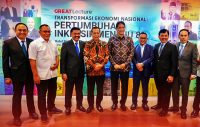
Special Staff to the Minister of Immigration and Correctional Affairs, Abdullah Rasyid, emphasized that immigration services now hold a key role in creating a conducive investment climate in Indonesia. Amidst the government’s efforts to drive economic growth, the immigration sector is considered one of the primary doors determining the interest of foreign investors to enter and plant capital.
Based on data from the Investment Coordinating Board (BKPM), investment realization in Indonesia throughout 2025 reached over Rp1,400 trillion, with a significant portion stemming from Foreign Direct Investment (FDI). The processing industry, mining, and services sectors emerged as the largest contributors, all of which heavily rely on the ease of mobility for foreign workers and cross-border investors.
According to Rasyid, the transformation toward more modern, fast, and transparent immigration services is part of the government’s grand strategy to boost Indonesia’s global competitiveness. Ease in processing visas, stay permits, and innovative policies like the Golden Visa have become crucial factors in providing comfort and certainty for investors. The Golden Visa program itself has attracted over 1,000 investors with investment commitment values reaching approximately Rp48 trillion.
“Immigration services today are not merely administrative, but have become a strategic instrument to support the investment climate. Ease, speed, and legal certainty are what foreign investors pay close attention to,” he stated.
He added that Kemenimipas continues to carry out bureaucratic reform through the digitalization of services as well as the simplification of procedures. Currently, various services such as e-visas and stay permit extensions can be accessed online, cutting service times from days down to just a matter of hours in certain cases.
On the other hand, Abdullah Rasyid emphasized that immigration policy continues to prioritize the Selective Policy principle, which means granting access only to high-quality investors who deliver a positive impact on the national economy.
“We are opening up the widest possible space for investors who bring tangible benefits, while still safeguarding national sovereignty and security. This is a balance that must be maintained,” he stressed.
Furthermore, he explained that immigration’s role in supporting investment does not stand alone but is integrated with various other sectors, including economic policy, labor, and business licensing. Synergy across ministries and agencies is key to creating a healthy and sustainable investment ecosystem.
With these various strategic steps, Rasyid is optimistic that Kemenimipas will continue to be one of the vital pillars driving the influx of foreign investment, which ultimately impacts increased economic growth and job creation in Indonesia.
“We want to ensure that every investor who comes experiences ease and certainty. That way, Indonesia will be increasingly trusted as a safe and promising investment destination,” he concluded.