


Executive Summary
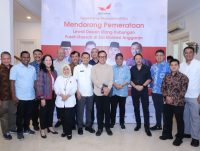
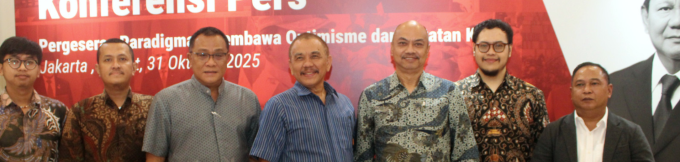
The book launch of Menggugat Republik, organized by the GREAT Institute on 5 March 2026 at the West Hall of the Bandung Institute of Technology, serves as a public dialogue forum bringing together academics, policymakers, activists, and public intellectuals to reflect on the direction of national development amid shifting global economic and political landscapes. This event is not only a platform for introducing an intellectual work to the public, but also a space for exchanging ideas on the relationship between economic development, democratic dynamics, and the future of the Republic of Indonesia.
Discussions in the forum emphasize the importance of maintaining a tradition of critical thinking in national life, while also encouraging the emergence of policy ideas capable of addressing key strategic challenges such as food security, job creation, and strengthening national economic capacity. From an economic perspective, the forum highlights the urgency of structural transformation from a development model based on natural resource exploitation toward one grounded in human capital development, technological mastery, and high value-added industries, including strengthening the people-based economy through the modernization of cooperatives.
In the global context, shifts in the economic landscape marked by financial crises, pandemics, and geopolitical rivalry have pushed countries to strengthen domestic capacity and reduce dependence on global supply chains. Indonesia, despite maintaining stable growth of around five percent, still faces the challenge of ensuring that this stability translates into higher growth through deeper structural transformation, in order to avoid long-term stagnation.
The concept of Prabowonomics, discussed in this forum, is positioned as part of a broader public policy discourse that emphasizes strengthening national capacity, optimizing domestic resources, and expanding the role of the state in economic transformation. It is understood as an evolving concept that remains open to dialogue, criticism, and refinement from various stakeholders.
Overall, this event aims to broaden public discourse on the future of Indonesia’s development, strengthen the exchange of ideas between academics and policymakers, and encourage the emergence of strategic perspectives in formulating a more inclusive, equitable, and sustainable national development path.
The book launch event titled “Menggugat Republik” by Dr. Syahganda Nainggolan served as a discussion forum that brought together various figures from academia, policymakers, and public intellectuals. The forum not only functioned as a space to introduce intellectual work to the public, but also as a platform for reflection on the dynamics of national life and the direction of national development amid various changes in the global economic and geopolitical landscape.
In his presentation, Dr. Syahganda Nainggolan reflected on the historical trajectory of student activism and its transformation into a more strategic line of thought within state affairs. He expressed the view that President Prabowo Subianto is a national leader figure who has a strong foundation in populist ideology and nationalism, and who has remained consistent throughout his political journey. Based on this perspective, he encouraged the government to formulate short-term tactical measures (quick wins) to address various urgent issues faced by the public, such as food security problems and limited employment opportunities.
From an academic perspective, Prof. Dr. Ir. Tatacipta Dirgantara emphasized the importance of synergy among intellectuals to collaborate within the framework of national development, rather than becoming trapped in counterproductive polarization. Considering that Indonesia has reached the status of a middle-income country, he highlighted the urgency of reorienting the national economic paradigm in a more comprehensive manner. Development strategy needs to shift from an extractive model that relies on the exploitation of raw natural resources toward the development of high-quality human capital and mastery of high-value-added technology. Such transformation requires long-term policy consistency, the elimination of an “inlander” inferiority mentality, and strengthened investment in educational institutions and the national industrial sector in order to support higher economic growth targets toward the vision of Golden Indonesia (Indonesia Emas).
The idea of structural transformation was then linked to the economic framework of the current administration, which in the forum was represented as Prabowonomics. The Minister of Cooperatives of the Republic of Indonesia, Dr. Ferry Juliantono, explained that this economic approach essentially stems from efforts to actualize the constitutional mandate, particularly the principle of social justice enshrined in the 1945 Constitution. From this perspective, economic development is not solely growth-oriented, but must also ensure a more equitable distribution of welfare for the broader society.
One concrete manifestation of this approach is realized through the acceleration of the establishment of Red and White Village/Urban Cooperatives (Koperasi Desa/Kelurahan Merah Putih) at the grassroots level. Based on field assessments by the Ministry of Cooperatives, there are still various basic infrastructure gaps in several rural areas, ranging from limited access to electricity to inadequate digital infrastructure. In this context, village cooperatives are projected not only as economic entities, but also as strategic state instruments to strengthen the community-based economy while accelerating local-level development.
Overall, the discussion in this book launch forum demonstrates a shared awareness of the importance of redefining the direction of national development toward greater social justice, strengthened national capacity, and community economic empowerment. The exchange of ideas shows that discourse on Indonesia’s economic future is not only related to technical policy issues, but also touches upon the ideological dimension of how the state fulfills its constitutional mandate to achieve prosperity for all people.