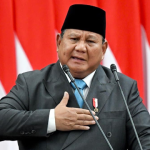


President Prabowo Subianto’s speech during the Plenary Session of the House of Representatives of the Republic of Indonesia (DPR RI) on Wednesday, May 20, 2026, officially marked a new milestone in Indonesia’s constitutional tradition as the first president to personally deliver the introduction to the Macroeconomic Framework and Main Fiscal Policy Directions (KEM-PPKF) for the 2027 State Budget Draft (RAPBN 2027).
This move broke with the long-standing tradition in which the task was usually delegated to the Minister of Finance, and reflected the President’s tactical response to be directly present among the people amid growing geopolitical and geo-economic uncertainty. GREAT Institute appreciates President Prabowo Subianto’s direct presence. His attendance signifies his commitment to standing alongside the people amid ongoing geopolitical uncertainty.
In addition, this presence also signals that the government intends to position the design of the 2027 State Budget as a strategic instrument to strengthen fiscal foundations and reorganize the direction of the national economic system.
The government is targeting economic growth for 2027 in the range of 5.8–6.5 percent, state revenue at 11.82–12.40 percent of GDP, state expenditure at 13.62–14.80 percent of GDP, and a budget deficit maintained within 1.80–2.40 percent of GDP.
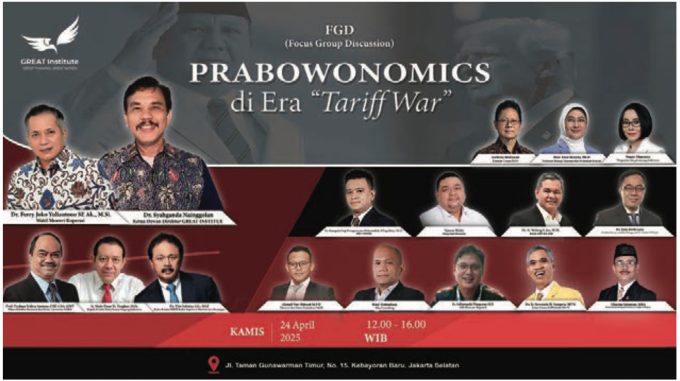
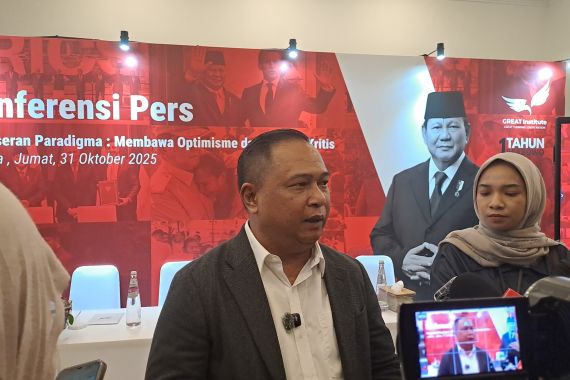
Executive Director of GREAT Institute, Sudarto, assessed that this year’s presidential speech carried greater weight than merely presenting annual macroeconomic targets.
According to Sudarto, the main strength of the speech lay in the President’s courage to connect the State Budget with the agenda of protecting the people, reforming the structure of state revenue, and strengthening sovereignty over national wealth.
In his speech, the President emphasized that the State Budget must serve as a tool to protect the people, strengthen the foundations of the national economy, and ensure that every citizen can live more prosperously. The President also stressed that the 2027 fiscal direction must continue to be prepared prudently and sustainably amid increasingly uncertain global geopolitical and geo-economic challenges.
“The President did not present the State Budget merely as a state financial document, but as an instrument of national struggle. This is important because in a globally pressured situation, the State Budget cannot simply be viewed as a fiscal administrative instrument, but as a tool to protect the people, strengthen economic resilience, and correct systemic weaknesses that have long limited the state’s capacity,” said Sudarto.
GREAT Institute considers this message important because it was delivered amid increasing market scrutiny of the Indonesian economy following negative outlook revisions by Moody’s and Fitch Ratings, the weakening of the rupiah, and pressure on the domestic stock market in recent months.
According to Sudarto, the President’s speech also stood out because it explicitly addressed issues that have often only been discussed half-heartedly within Indonesia’s fiscal discourse, namely the low ratio of state revenue to GDP and the alleged large-scale leakage in the management of national wealth.
“This is where the President’s speech becomes interesting. He did not stop at growth targets of 5.8 to 6.5 percent or a deficit target of 1.8 to 2.4 percent. He also provided a diagnosis that Indonesia’s fiscal space is too narrow for a country of Indonesia’s size, and that this weakness cannot be separated from issues such as leakage, under-invoicing, transfer pricing, and weak state control over the value chains of strategic commodities,” said Sudarto.
In his speech, the President highlighted that Indonesia’s state expenditure ratio and state revenue ratio to GDP remain very low compared to several other countries, while also mentioning practices such as under-invoicing, transfer pricing, and the long-term outflow of national wealth as root causes of Indonesia’s fiscal limitations.
The President also reaffirmed the importance of returning to the Constitution in accordance with Article 33 of the 1945 Constitution as the blueprint for the national economy, emphasizing that land, water, and natural resources must be managed for the greatest prosperity of the people.
GREAT Institute views this emphasis as a sign that the government is beginning to combine the macro-fiscal agenda with a more open agenda of correcting the national economic structure.
Sudarto believes that in terms of direction, the President’s speech has already laid the right foundation. However, the next challenge lies in execution.
The state revenue target, which remains only within the range of 11.82–12.40 percent of GDP, shows that the revenue reform agenda still has to work much harder if the government intends to finance priority programs without increasing fiscal vulnerability.
“If the government truly wants the State Budget to become an instrument of struggle, then concrete execution instruments are needed. State revenue reform must become sharper, supervision of commodity exports must be tightened, cross-agency data integration must be improved, and customs and taxation governance must be reformed down to the implementation level. Without that, the President’s diagnosis will be correct, but the state’s fiscal capacity will remain narrow,” said Sudarto.
GREAT Institute also views the deficit target of 1.80–2.40 percent of GDP as a signal that the President wants to demonstrate a combination of pro-people policies and fiscal prudence.
Compared to the 2026 deficit outlook, which according to Indonesia’s Minister of Finance stands at around 2.9 percent of GDP after accounting for the impact of the Middle East conflict, the 2027 target indicates a fairly clear intention toward fiscal consolidation.
From GREAT Institute’s perspective, this is an important message for the market: the government still wants to be aggressive in its development agenda, but does not want to sacrifice fiscal discipline.
At the same time, GREAT Institute believes that the President’s speech signals that the government is moving toward a new phase in the management of strategic commodities.
The government is currently preparing a more centralized scheme to manage major commodity exports in order to increase state revenue and strengthen oversight of natural resources.
If this agenda is designed with good, transparent, and accountable governance, it could become part of a strategy to reduce leakage and maximize the benefits of natural wealth for the State Budget and the people. However, if the institutional design remains unclear, it could instead create new concerns within the market. Therefore, policy details will become the main determining factor.
“This speech is important because the President did not only speak about targets, but also about root problems. That is a good step. Now the challenge is ensuring that the courage to diagnose problems is followed by the courage to execute reforms. That is where the credibility of the 2027 State Budget will truly be tested,” added Sudarto.
In the end, GREAT Institute believes that President Prabowo’s speech at the DPR marked two important things simultaneously.
First, there is a commitment to maintaining a prudent fiscal direction for 2027 amid difficult global conditions.
Second, there is a more open acknowledgment that Indonesia’s economic issues are not only about how fast the economy grows, but also about how the state restores its capacity to collect revenue, manage national wealth, and ensure that the benefits of development are truly enjoyed by the broader population.
“The President’s step is not a gamble, but a struggle for the better future of the people.
The President is striving to increase state revenue through more orderly, transparent, and nationally oriented natural resource governance. If leakages can be reduced, then state revenue will become stronger and can eventually be distributed properly to the people through education, healthcare, social protection, village development, and job creation. However, these efforts cannot succeed without the full support of the people themselves. Therefore, we must work together to support the President’s steps for shared prosperity,” concluded Sudarto.
This article has been published on VIVA.co.id