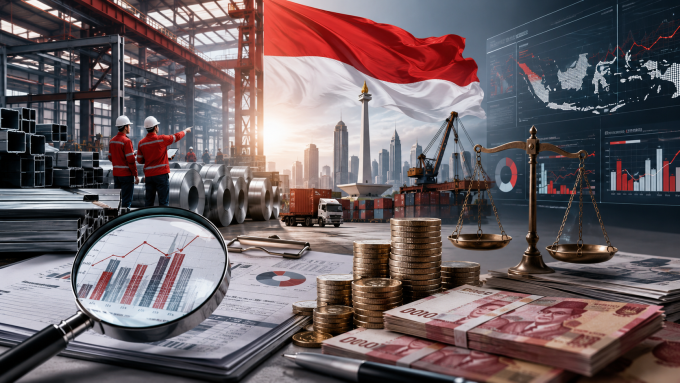

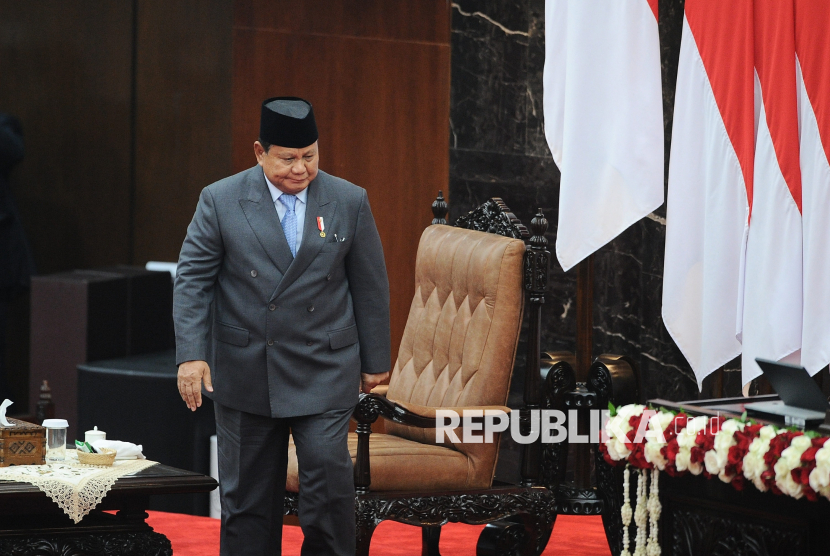

REPUBLIKA.CO.ID, The launch of the 2025 Economic Package Program comes at a time when national politics is still marked by transitional turbulence in government. The Prabowo Subianto administration is using fiscal, social, and deregulation policy instruments to ease uncertainty. This approach is in line with Keynesian counter-cyclical fiscal policy theory, where government intervention can stabilize the economy during shocks (Keynes, The General Theory of Employment, Interest and Money, 1936). With a package worth IDR 16.23 trillion for 2025, the government seeks to restore public confidence in the short term, typically within a 3–6 month horizon after the program is launched.
Food assistance programs, labor-intensive projects, and BPJS contribution discounts are directed at vulnerable groups. World Bank research (2022) on social protection in Southeast Asia confirms that cash or food assistance is effective in dampening social unrest in the very short term (1–3 months), although its impact on productivity is limited. It is expected that this economic package intervention will not merely function as a shock absorber for socio-political turbulence but will become a driver of sustainable and directed economic growth.
Acceleration of the Economic Package: 8+4+5
The eight acceleration programs—graduate internships, tax incentives for PPh 21 in the tourism sector, food assistance, housing subsidies, and deregulation—reflect a combination of demand-side policy and supply-side reform. IMF research (2019) on fiscal multipliers in emerging markets shows that consumption-based fiscal stimulus is typically felt within 6–12 months, while structural reforms such as deregulation only have full effects after 2–3 years. This means that society will feel direct assistance more quickly (rice aid, tax subsidies), while the benefits of deregulation and new housing development will only be visible after 2027.
The four follow-up programs, including the extension of the 0.5% final income tax (PPh Final) for MSMEs until 2029, are long-term fiscal incentives. According to OECD research (2020) on MSMEs, tax incentives can improve compliance and formalization of businesses, but their impact on job creation usually takes 2–4 years. Thus, this measure is more of a long-term investment in institutional trust rather than an immediate policy.
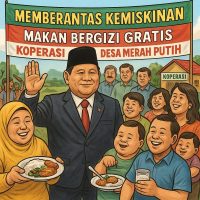
The five employment absorption programs through the Red and White Cooperatives, pond revitalization, ship modernization, and smallholder plantation replanting target labor-intensive sectors. An ILO study (2021) states that cash-for-work and agricultural investment projects typically require 1 year to show real employment absorption, while maximum results (such as cocoa or sugarcane harvests) are only seen after 2–5 years. Therefore, although labor can be absorbed quickly in the early stages, significant improvements in fishermen and farmers’ household income will only occur after a full production cycle.
The allocation of IDR 200 trillion through housing and fisheries KUR (People’s Business Credit) has strong potential to stimulate growth. Asian Development Bank research (2023) shows that subsidized credit programs can improve housing access and productivity within 12–24 months, depending on distribution effectiveness. However, the risk of credit misallocation is also high if governance and monitoring are weak. Lower- and middle-income communities will quickly feel the impact through access to affordable housing, while the fisheries sector will only become optimal after 2–3 years.
The establishment of the Priority Program Acceleration Team is important to reduce fragmentation. Rodrik’s (2007) growth diagnostics study shows that cross-agency coordination is often the determining factor in whether stimulus succeeds or fails. Institutional impacts of this nature are usually slow, taking 3–5 years, as they require changes in bureaucratic culture and monitoring effectiveness. Without good governance, all programs risk becoming short-term projects without sustainable growth momentum.
Short-Term Economic Growth?
With a combination of consumption support, labor-intensive programs, and cheap credit, the government could boost GDP growth by 0.3–0.5% in the short term (1 year), based on Bank Indonesia’s fiscal multiplier estimates (2022). However, structural contributions to productivity will only be visible if these programs are integrated with downstream industrialization and digitalization agendas. This means people may quickly feel relief in food prices or temporary jobs, but the impact on national competitiveness will only appear after 2027 and beyond.
Food assistance and BPJS subsidies will be immediately popular among the public. Barrientos’ (2013) research on social assistance in developing countries shows that political legitimacy from direct aid programs usually emerges within 1–2 months. However, if not linked to empowerment programs, there is a risk of dependency syndrome. The government must actively communicate that these programs are transitional toward self-reliance.
The 2025 Economic Package is clearly an effort to ease political tension by signaling pro-people policies. Acemoglu and Robinson (Why Nations Fail, 2012) emphasize the importance of inclusive institutions so that policies do not merely become tools of political survival. The political stability impact of such economic packages is usually felt within 6–12 months, especially if they successfully reduce social protest potential. However, if they are merely cosmetic, public trust will weaken again after the program ends.
Constructive Recommendations
To maximize impact, the government needs to: (1) use big data and NIK integration to ensure targeting accuracy; (2) ensure productive credit flows to fishermen, farmers, and MSMEs rather than housing speculation; (3) integrate the economic package with an industrial upgrading vision to extend the multiplier effect; (4) establish an independent impact evaluation mechanism. In this way, short-term impacts (1 year) can be locked into a medium-term growth foundation (3–5 years).
Between Opportunity and Challenge
Overall, the 2025 Economic Package Program is a combination of emergency stimulus and development strategy. The public will quickly feel benefits in the form of food assistance, subsidy contributions, and temporary employment within 3–6 months. Medium-term benefits, such as increased production in fisheries and agriculture, will emerge within 1–3 years. Structural benefits, such as cooperative strengthening, deregulation, and downstream industrialization, will only be visible in a 3–5 year horizon. This is the biggest challenge: ensuring that political momentum does not merely produce short-term policies, but builds a solid foundation for long-term economic sustainability.