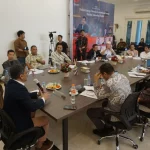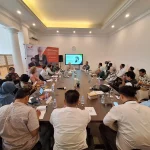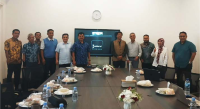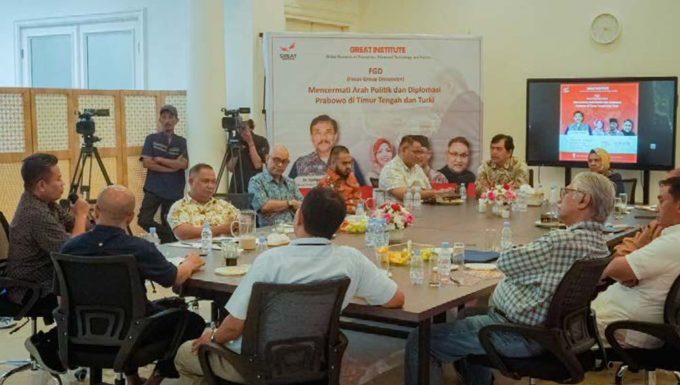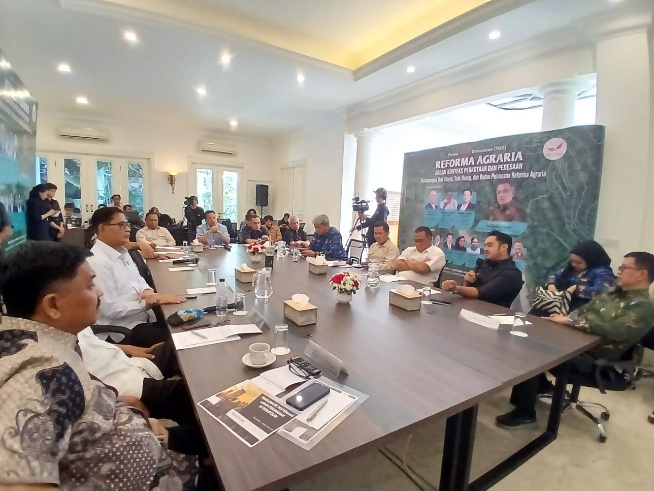

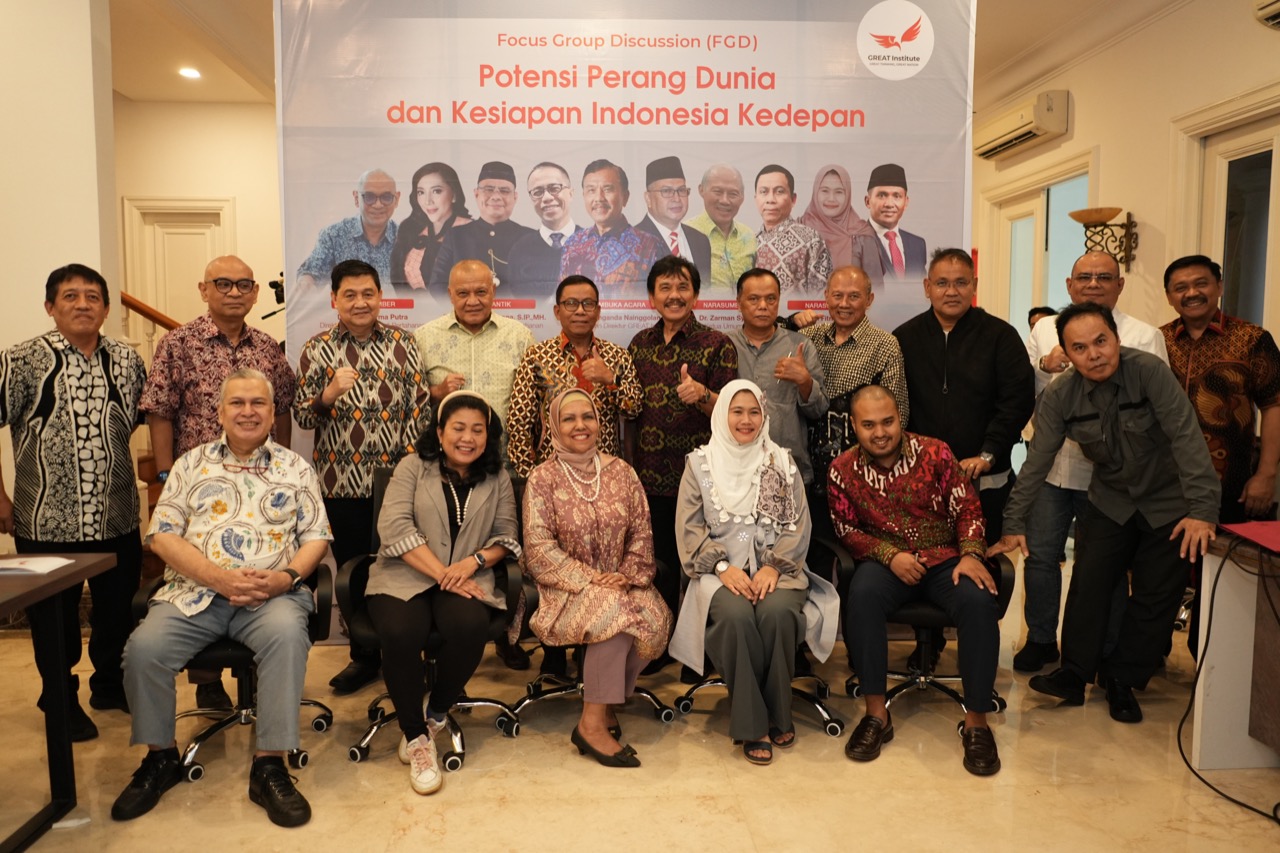

In responding to an increasingly complex and uncertain global geopolitical dynamic, GREAT Institute organized a Focus Group Discussion (FGD) themed “The Potential for World War and Indonesia’s Future Readiness” on Friday, July 4, 2025. The event brought together speakers from various fields, including economics, international relations, defense and security, and public policy.
The discussion was driven by the escalating conflicts between the United States, Israel, and Iran, which have also involved major powers such as Russia and China. This situation has serious consequences for global economic stability, particularly in energy resilience, logistics, and food supply, all of which significantly affect Indonesia as a country highly dependent on imported energy and food.
The FGD was officially opened by Dr. Syahganda Nainggolan, Chairman of the Board of Directors of GREAT Institute, who emphasized that the world situation is far from stable. Therefore, cross-sector strategic discourse is needed to design adaptive and anticipatory national policies in response to international geopolitical developments.
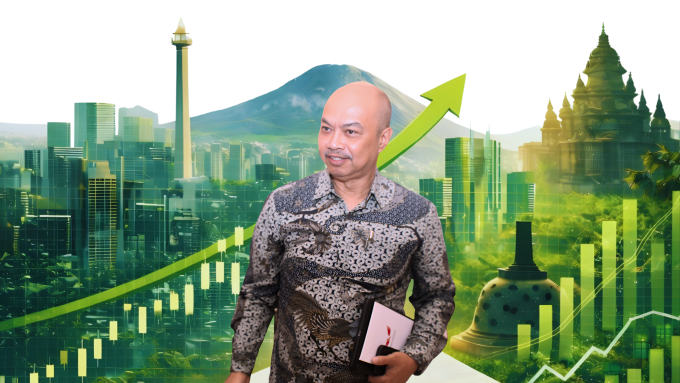
Economist Dradjad Hari Wibowo stated that Indonesia’s main challenge in facing global conflict impacts lies in national fiscal resilience. He stressed that although President Prabowo Subianto’s vision is highly ambitious—especially in food self-sufficiency, energy sovereignty, and defense—its realization requires strong and measurable fiscal support. He noted that Indonesia required state revenue of IDR 3,900 trillion in 2025, while revenue as of June 2025 was only IDR 1,451 trillion, lower than the previous year.
Dr. Anton Permana emphasized the need to strengthen national preparedness against global conflict by identifying four major global flashpoints: Ukraine, the Middle East, East Asia (Taiwan and Korea), and the South China Sea. He highlighted the importance of establishing a National Security Council to integrate intelligence, diplomacy, defense, and public policy.
Helmy Fauzy, former Indonesian ambassador to Egypt, highlighted Indonesia’s strategic position in the regional landscape. He noted that the shift of 60% of U.S. military power to the Asia-Pacific has made the region a new geopolitical epicenter. He encouraged strengthening ASEAN’s strategic role and reviving the spirit of the Asia-Africa Conference while supporting Indonesia’s entry into BRICS.
From a legal perspective, Commissioner General Iza Fadri stated that under the 1945 Constitution, the President of Indonesia holds full authority as head of state and government to declare emergencies and issue government regulations in lieu of law (Perppu). However, he warned that Indonesia still lacks a structured contingency scenario and early warning system for geopolitical crises.
Security expert Dr. Stepi Anriani emphasized that modern warfare is no longer conventional but simultaneous and multidimensional, citing Russia’s strategy in Ukraine involving early attacks on communication infrastructure. She stressed the importance of reserve forces training, cyber defense strengthening, and oil shock contingency planning.
Military analyst Dr. Rizal Darma Putra discussed the historical evolution of U.S. foreign policy rooted in the containment strategy during the Cold War, originally designed by George Kennan. After the collapse of the Soviet Union, the U.S. became a unipolar power engaging in interventions such as in Iraq. Today, China is seen as the main competitor, prompting increased U.S. engagement in the Indo-Pacific region, including closer ties with Indonesia.
Dr. Sunoto highlighted the fragility of global security, noting that ceasefires such as between Iran and Israel could easily collapse. He stressed the need for a national early warning system and warned that modern warfare can begin instantly through digital attacks.
Dr. Nurhayati Assegaf pointed to global leadership instability, particularly following the re-election of Donald Trump. She advocated for stronger digital diplomacy, expanded Global South cooperation, and greater female participation in diplomacy and peacebuilding.
Dr. Ahmad Yani emphasized the need to align government structure with President Prabowo’s strategic vision, including optimizing tax revenue and natural resource management. Dr. Rahmi Fitriyanti proposed establishing a dedicated water resilience institution and deploying reserve forces in strategic maritime areas such as the Strait of Malacca, the South China Sea, and eastern Indonesia.
Other participants highlighted the importance of counter-intelligence capabilities, cyber warfare units, and strategic asset cooperation. Teguh Santosa stressed that in an anarchic international system, national interest must be prioritized, and national resilience depends not only on military strength but also on human resource development.
Closing the forum, Dr. Syahganda Nainggolan reiterated the urgency of establishing a National Security Law and a National Security Council, while also involving civil society, academics, and professional communities in strengthening national resilience. He reaffirmed Indonesia’s free and active foreign policy, directed toward maintaining balance of power and protecting national interests.
Through this FGD, GREAT Institute reaffirmed its commitment to serving as a strategic research platform grounded in data, policy analysis, and cross-sector approaches. Amid increasingly unpredictable global challenges, Indonesia must strengthen its national resilience comprehensively—not only in defense, but also in energy, food, water, and economic sectors.