


Imagine this: Indonesian citizens can now travel back and forth to Europe more easily without the hassle of repeatedly applying for visas. After a second visit to European Union countries, one can apply for a Multi-Entry Schengen Visa. This visa is like a golden key that opens unrestricted access to 26 Schengen countries—from France, Germany, Italy, to the Netherlands—without having to apply for a new visa each time. The validity period is also quite long, ranging from 1 to 5 years, depending on each consulate’s policy.
Of course, this visa does not apply to students or workers. But for entrepreneurs and professionals, it is a golden opportunity. Imagine conducting business trips while also traveling, moving from one country to another without worrying about complicated border checks. Internal borders within Schengen countries have indeed been removed, allowing stays of up to 90 days within a 180-day period.
Take Germany as an example. It is one of the favorite destinations for Indonesian entrepreneurs. Our export products that often arrive there include textiles, agricultural products, vegetable oils, footwear, and mineral ores. Now, with a multi-entry visa, Indonesian businesspeople can expand further—not only in Germany but across all 26 Schengen countries.
Let us imagine the scenario: so far, a company might only export textiles and agricultural products directly to Germany. But with the convenience of multi-entry access, the sales division can start planning expansion into other European markets. This aligns with Indonesia’s government strategy to diversify export markets, especially amid pressure from U.S. import tariffs reportedly reaching 32%.
Flagship products such as coffee, cocoa, textiles, and handicrafts can now be promoted directly to various European markets. Repeated visits become easier, strengthening competitiveness compared to neighboring countries such as Vietnam or Malaysia.
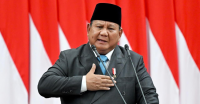
This positive development was announced by President Prabowo Subianto during his visit to Brussels, Belgium, on July 13, 2025. In a bilateral meeting with European Commission President Ursula von der Leyen, Indonesia finalized the Indonesia–European Union Comprehensive Economic Partnership Agreement (IEU-CEPA). One of its key points is the elimination of tariffs for around 80% of Indonesian export products to the European Union within 1–2 years after implementation.
This is certainly good news for Indonesian products such as palm oil, copper, industrial fatty acids, and footwear, which can now become more competitive compared to products from Vietnam or Malaysia.
With more flexible travel access, Indonesian export sales teams gain greater freedom to conduct direct market research across European countries. They can observe market needs, ensure smooth logistics, and build stronger supply chains to expand product distribution.
In short, with this new visa policy, it is time for our coffee, cocoa, textiles, and footwear to go further—penetrating the heart of Europe.