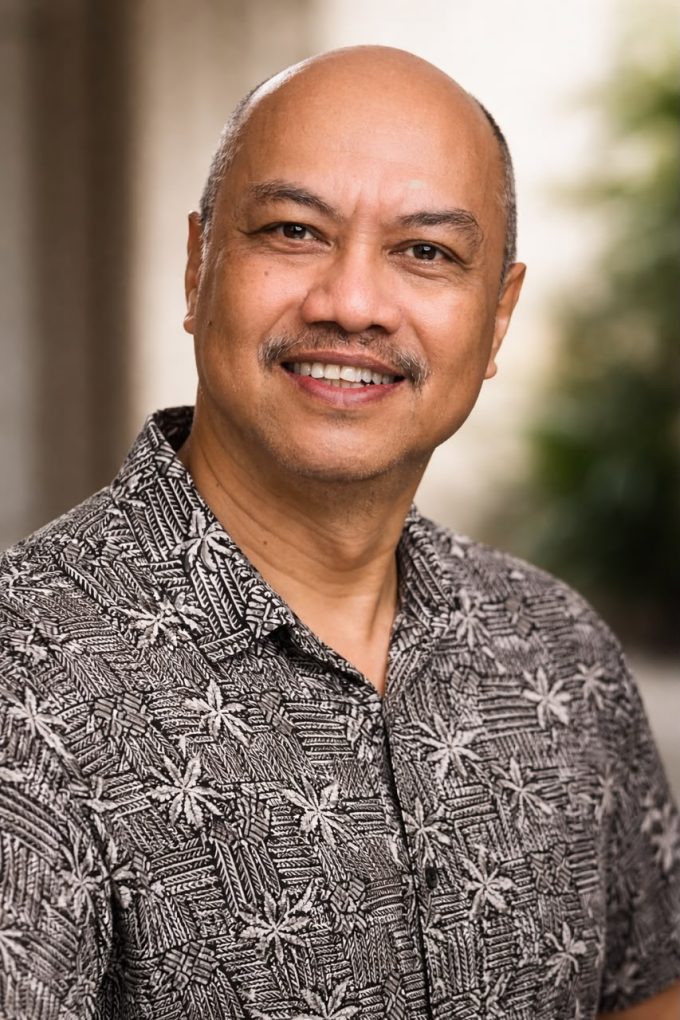



Prof. Perdana Wahyu Santosa, GREAT Institute RECENTLY, Indonesia has frequently prided itself on the middle class as a consumption engine. However, it turns out there is a “gray zone” that is rarely discussed: the near-middle (vulnerable) group—households that are slightly above the poverty line but do not yet possess an adequate financial cushion.
They no longer fall into the robust social safety nets, yet they are not established enough to absorb shocks such as layoffs, illness, or price spikes. Economic data points to this problem clearly: our social safety nets heavily target the poor, while the “near-middle” group tends to be left to fend for themselves.
In fact, if the Ministry of Finance’s growth target for 2026 is 5.4%, then the stability of household consumption and the quality of jobs will be the primary determinants, not merely “optimism.” This is where a stimulus policy for the vulnerable middle class must be read as a sane macro strategy—not to pamper, but to keep the economic engine alive.
Moving Up the Ladder But Without a Seatbelt?
There are four interlocking root problems, namely:
- First, imbalanced social protection. When social assistance focuses more on the poor, households “slightly above” the poverty line face the risk of falling back down when hit by a shock. This creates a downward mobility phenomenon: people work hard to move up the ladder, only to drop back down due to a single adverse event.
- Second, informality absorbing new jobs. Your material confirms that around 80% of new jobs (2019–2024) emerged in the informal sector, with average incomes far lower than in the formal sector. With this kind of employment base, household consumption is indeed large, but fragile—making it easily shaken by food inflation, installments, or healthcare costs.
- Third, the “cost economy,” which refers to additional costs resulting from convoluted regulations, slow permits, corruption, and legal uncertainty. The impact is not only felt by investors; ultimately, it falls upon the workers through stagnant wages and stagnant job quality.
- Fourth, the skills gap. More than half of the workforce is educated to a junior high school (SMP) level or below, making productivity and wage mobility difficult to drive.
Thus, the problem is not that “the middle class lacks assistance,” but rather that the state does not yet have a mechanism to prevent consumption and productivity from plummeting during a shock.
Stimulus for the Vulnerable Middle Class is Pro-Growth
There is a weak assumption that we certainly need to shatter: “social stimulus is always wasteful and unproductive.” This is not always the case. Under certain conditions, a well-targeted stimulus functions precisely like an automatic stabilizer because it plays a role in maintaining consumption, dampening volatility, and protecting labor productivity.
If 5.4% growth is the 2026 target, the Ministry of Finance itself positions the state budget (APBN) as the motor for strengthening consumption and productivity. In this context, a stimulus for the vulnerable middle class works through three main channels:
- The consumption channel: via additional disposable income for groups with a high Marginal Propensity to Consume (MPC) (those who spend a large portion of their income), which immediately flows back into retail, services, transportation, and MSMEs.
- The employment channel: via temporary support to prevent households from cutting education and health spending or selling productive assets—two decisions that damage medium-term growth.
- The expectation channel: when households feel there is a “minimal safety net,” economic behavior becomes less panicked; the impact is often seen in the stability of domestic demand.
An example of Finance Minister Purbaya Yudhi Sadewa’s policy that aligns with this logic is the government-borne income tax (PPh 21 DTP) incentive for specific workers (with a salary cap of 10 million), which was widely discussed as “full salary without deductions” and targeted labor-intensive sectors. This is not the only instrument—but it shows a direction: the government can choose stimuli that quickly trickle down to consumption without complicating the assistance bureaucracy.
Stimulus Must Be a Ladder, Not a Crutch
To ensure this policy supports economic growth (without recklessly burdening the fiscal side, of course), its design must be disciplined. Three core recommendations need to be considered:
(1) Build a conditional and temporary “shock absorber.” The form could be a combination: topping up health premiums/coverage for the near-middle, temporary assistance upon job loss (similar to temporary income support), or income tax incentives for workers in specific sectors. The keys: data-driven targeting, a clear duration (sunset clause), and exit indicators—for instance, when core inflation stabilizes or the labor market improves. This makes the policy look like a growth strategy, not a political handout.
(2) Attack the root problems of employment: formality and quality. Stimulus without reforming the “cost economy” only treats the symptoms. Economic facts confirm the high cost of doing business due to regulations/permits/uncertainty. Therefore, the package must be explicit: accelerated permitting that genuinely slashes costs, certainty in contract enforcement, and reduced logistics costs. This is the most elegant way to increase real wages without raising the burden on companies.
(3) Make skill upgrading a “mandatory component” of the stimulus. If more than half of the workers are educated to a junior high school level or below (your material), then the best stimulus is one that ties support to industry-relevant upskilling/reskilling. Policy-wise, this transforms assistance from consumption into a productivity investment—which ultimately expands the tax base and strengthens the state budget.
Conclusion
Stimulus for the vulnerable middle class is not a “pampering” expenditure. It is a tool for stabilization and acceleration—a thin safety net that prevents the economy from slipping when a shock arrives, while driving the transition toward more formal and productive employment.
With a measured and disciplined design, this policy supports—implicitly yet tangibly—the Ministry of Finance’s growth agenda so that the Minister’s 5.4% target is not just a number in a document, but the result of a more resilient economy.
*Economics Professor, Dean of FEB YARSI University, Research Director of GREAT Institute, and CEO of SAN Scientific